
Construction Debris Removal & Hauling in Bowie, MD
Construction debris removal hauls the nonhazardous material a project leaves behind — scrap lumber, drywall offcuts, packaging, and the general jobsite debris that piles up faster than the bins can take. Tell us the material, the volume, and the loading access and we'll scope the haul and the disposal route.
Request a Junk Removal Estimate
Tell us what you need hauled in Bowie, MD & nearby areas.
Construction Debris Removal in and Near Bowie
Construction debris hauling covers scrap lumber, drywall debris, packaging materials, nonhazardous building materials, construction offcuts, and general jobsite debris from residential building projects and small cleanups. Most pickups come from a renovation, a build, or a post-project clear-out.
What makes it specific is the material. Weight, debris volume, and loading access all shape the haul — a pile of drywall offcuts by the curb is a different job than a floor of mixed lumber, packaging, and scrap spread across the site. The estimate starts with what's there and where the truck can get to it.
We don't accept suspected asbestos, lead-contaminated debris, hazardous chemicals, unidentified regulated materials, contaminated soil, or industrial waste unless capabilities and authorizations are verified. Remodeling-specific debris, ongoing commercial construction-site cleanup, and builder-contractor hauling are separate services with their own scope.
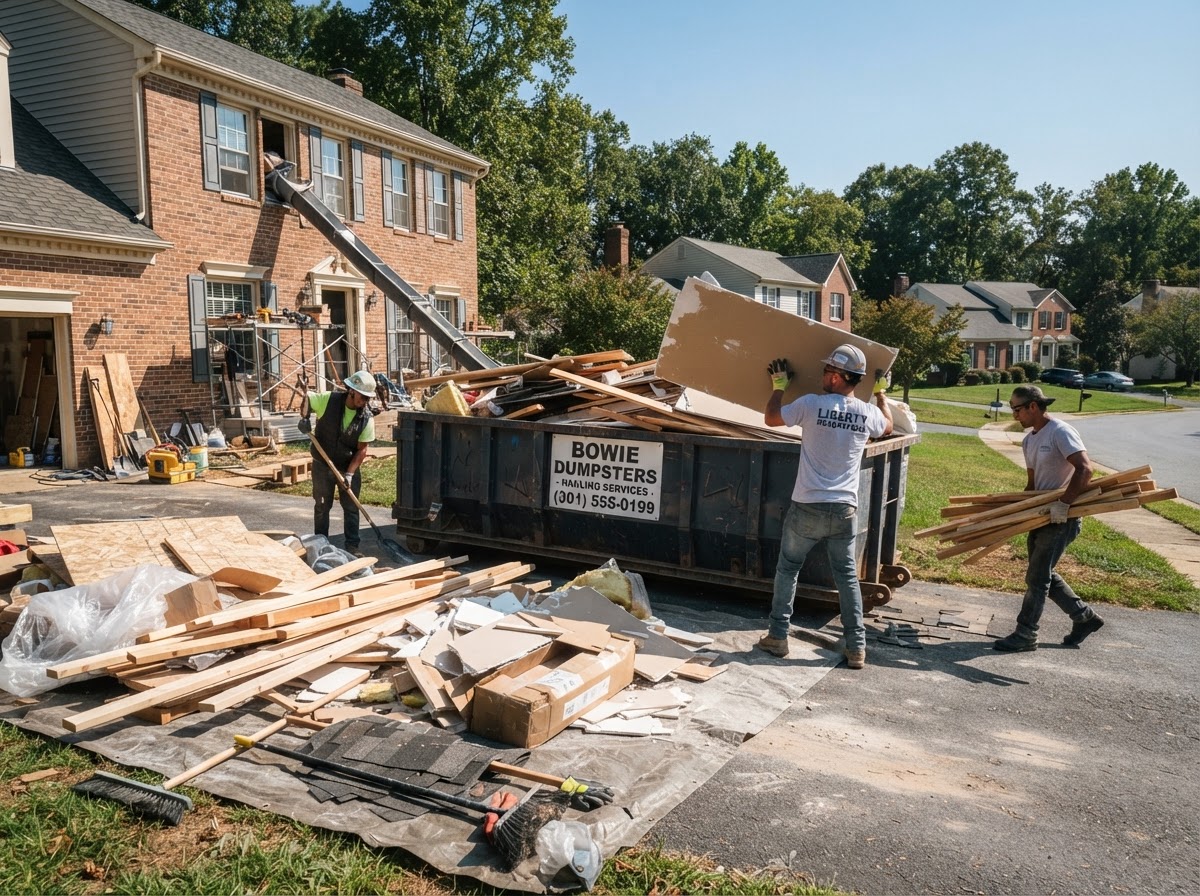
Building Material and Jobsite Debris Hauling

Construction Waste Removal for Residential Projects
Construction-debris pickups tend to follow a few project types. Here's what we see across Bowie.
Post-renovation clear
Scrap lumber, drywall, and packaging hauled out once a residential renovation wraps.
During-build cleanup
Jobsite debris cleared mid-project so the crew has room to keep working.
Small project cleanup
A remodel, a repair, or a DIY build's worth of offcuts and packaging hauled in one go.
Post-demo debris
Nonhazardous demolition debris — old trim, drywall, lumber — hauled after a tear-out.
How Construction Debris Removal Works in the Bowie Area
Describe the Debris
Tell us the material type, the volume, where it's piled, and the loading access — and flag anything suspected hazardous.
Request Your Estimate
We review weight, volume, and access and provide an estimate based on the real debris scope.
Review Scope and Disposal
We confirm what can be accepted, the disposal route, and a time that fits the project.
Complete the Haul
On the scheduled visit, we load the approved debris and route it to the appropriate disposal stream.
Scrap Lumber, Drywall and Material Cleanup
Material type and access define a construction-debris haul. A few notes up front keep it on schedule.
Construction Debris Volume and Access Considerations
Material type and weight
Drywall and lumber are heavier than packaging — weight drives crew and disposal.
Volume
A few bags versus a floor of mixed debris changes truck space and loading time.
Loading access
Curb-side piles load fast; debris spread across a site or up stairs adds labor.
Accepted materials
Suspected hazardous or regulated materials aren't accepted without verified capability — flag them up front.
Disposal and Handling Considerations
Nonhazardous construction debris is typically directed to an appropriate construction-and-demolition (C&D) disposal stream in Prince George's County. What can be accepted depends on the material and current facility rules — we confirm the route as part of the scope review.
We don't accept suspected asbestos, lead-contaminated debris, hazardous chemicals, unidentified regulated materials, contaminated soil, or industrial waste unless capabilities and authorizations are verified. Describe the material and we'll confirm what can be hauled.
Hazardous & Regulated Materials Not Accepted Here
Suspected asbestos, lead-contaminated debris, hazardous chemicals, unidentified regulated materials, contaminated soil, and industrial waste are not accepted on a standard construction-debris haul without verified capability and authorization. Flag any suspected hazardous material up front — describe the debris and we'll confirm the right path before the visit.
Related Debris & Removal Services
Construction Debris Removal Questions in Bowie
Which building materials can I request for pickup?
Common pickups include scrap lumber, drywall, packaging, nonhazardous offcuts, and general jobsite debris. Tell us the material and we'll confirm what can be accepted and the correct disposal route.
How do weight and debris volume affect estimates?
Heavier materials like drywall and lumber drive crew and disposal; volume drives truck space and loading time. Estimate the pile size and flag heavy loads so we scope correctly.
Do you take hazardous or regulated debris?
No — not on a standard construction-debris haul. Suspected asbestos, lead-contaminated debris, hazardous chemicals, contaminated soil, and industrial waste require verified capability and authorization. Flag any suspected hazardous material and we'll confirm the right path.
Can you haul debris from inside a renovation site?
Yes — note where the debris is piled and the loading access. Debris spread across a site or up stairs adds labor versus a curb-side pile.
Is this different from remodeling debris cleanup?
Yes. This page covers general construction debris. Remodeling-specific debris, ongoing commercial construction-site cleanup, and builder-contractor hauling are separate services with their own scope.
How is construction debris disposed of?
Nonhazardous debris is typically routed to a construction-and-demolition disposal stream in Prince George's County. We confirm the route based on the material and current facility rules — we don't guarantee a specific outcome for any load.
Ready to Haul That Construction Debris?
Tell us the material, the volume, and the loading access — and flag anything suspected hazardous. Request a construction debris removal estimate, or call us to confirm the right disposal route.