Estate Cleanout Checklist: Planning Resource for Families and Executors
An estate cleanout is part logistics, part family coordination, and often part probate process. This checklist helps families and executors think through the practical removal side — what to sort, what to document, how to separate keepsakes from items to donate or haul, and how to describe access and volume for a hauling estimate. It does not provide legal, probate, or financial advice; confirm executor authority and any probate requirements with an attorney.
Request a Junk Removal Estimate
Tell us what you need hauled in Bowie, MD & nearby areas.
Planning an Estate Cleanout in and near Maryland
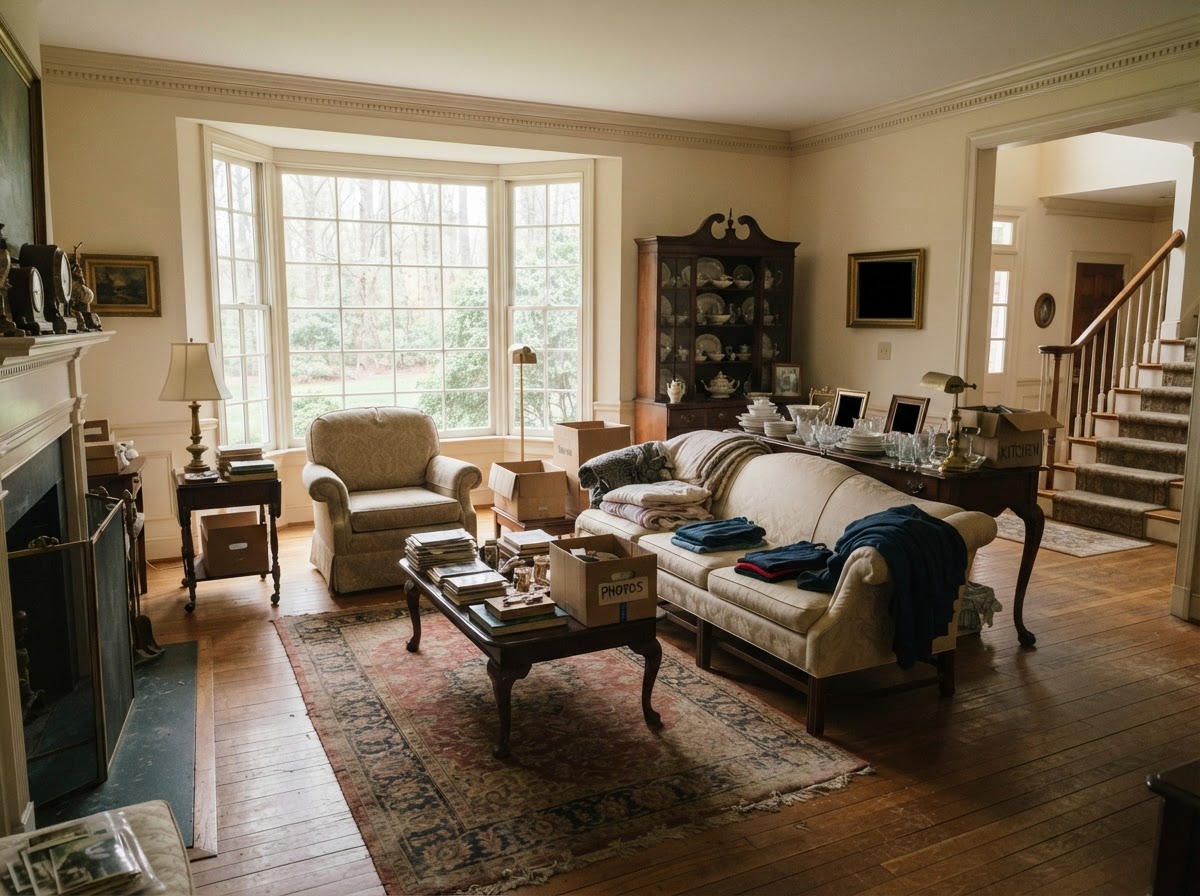
An estate cleanout usually follows a life transition — a death in the family, a downsizing move, or the settlement of an estate. The work involves identifying which belongings family members want to keep, separating items for donation or sale, documenting items of value or sentimental importance, and hauling what remains. It's often a multi-step, multi-visit project rather than a single-day removal.
Where the cleanout is tied to a probate estate, the executor or personal representative generally has authority over the property — but the exact authority and any required court filings depend on the estate and current Maryland procedure. Confirm the executor's authority and any probate requirements with an attorney before disposing of estate property.
This checklist is educational. It helps families plan the practical hauling scope of an estate cleanout and points toward the estate cleanout service for the actual removal estimate — without providing legal, probate, or financial advice or claiming a specific donation or recycling outcome.
Typical Items in an Estate Cleanout
Sort, Document, Donate, Haul
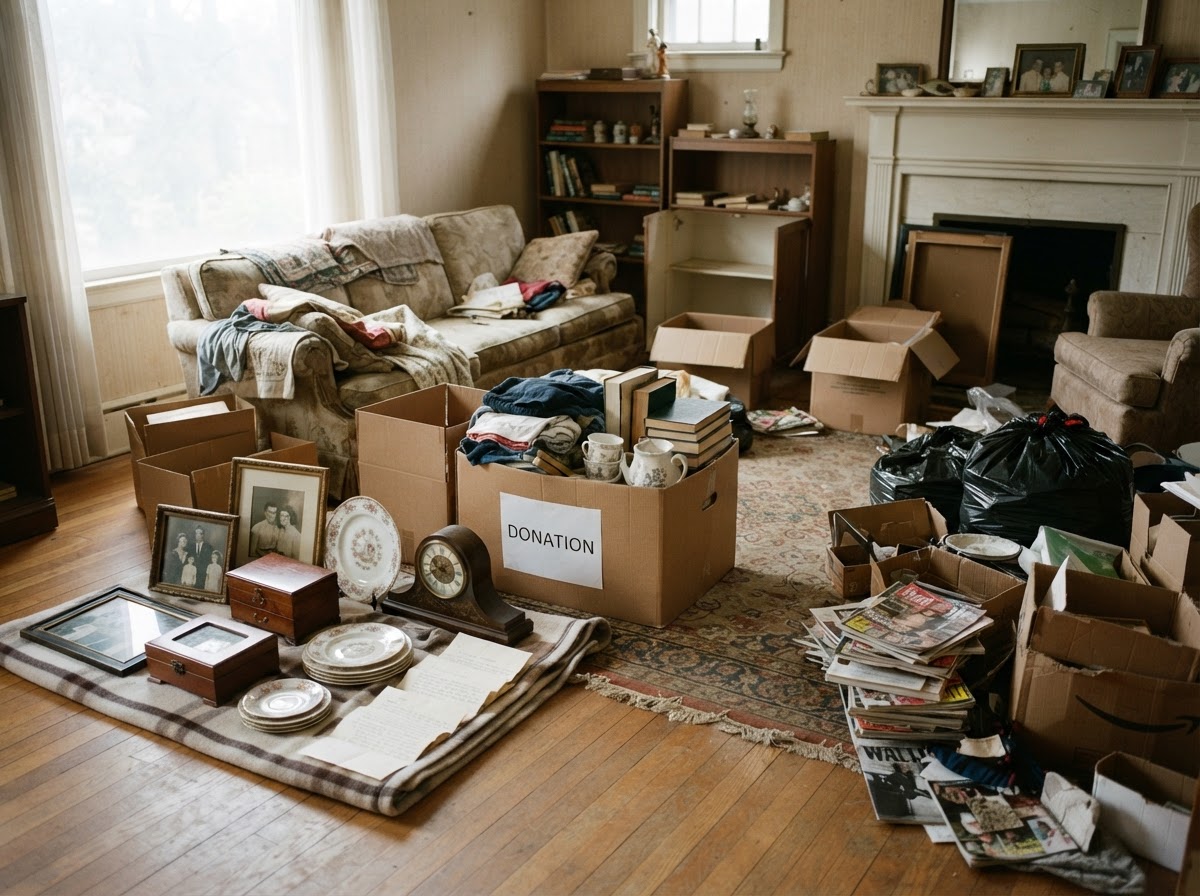
An estate cleanout usually moves through four phases. Here's how to think about each.
Family keepsakes
Set aside photographs, heirlooms, and items family members want to keep before anything is hauled. Coordinate who takes what and when.
Items of value
Document jewelry, antiques, collectibles, or high-value items — photograph, inventory, and consider an appraisal or estate-sale professional for saleable pieces.
Donation candidates
Usable furniture and household goods may be candidates for donation or estate sale, depending on condition and the receiving organization's current policies. Donation isn't guaranteed.
Haul the remainder
Once keepsakes, sale items, and donations are separated, the remaining ordinary belongings and debris can be described for a hauling estimate.
Estate Cleanout Step-by-Step
Confirm Executor Authority
If the cleanout is tied to a probate estate, confirm the executor or personal representative's authority and any probate requirements with an attorney before disposing of property.
Sort and Separate
Separate family keepsakes, items of value, donation candidates, and the discard pile so nothing important is hauled by mistake.
Document Valuables
Photograph and inventory jewelry, antiques, collectibles, and high-value items. Consider an appraisal or estate-sale professional for saleable pieces.
Coordinate Donations or Estate Sale
Where usable items will be donated or sold, coordinate that separately so they aren't mixed into the hauling pile.
Describe the Hauling Scope
Once keepsakes, sale items, and donations are separated, describe the remaining volume, floors, stairs, and access for a hauling estimate.
Estate Cleanout Planning Checklist
Confirm these details before requesting a hauling estimate.
What Affects an Estate Cleanout Hauling Estimate
Volume
A single room of clutter and a full-house estate clear-out produce very different hauling scopes.
Access
Stairs, narrow hallways, basements, attics, and driveway or street parking all affect loading time and labor.
Phasing
A cleanout split across multiple visits — keepsakes first, then donations, then hauling — can be easier to coordinate than a single-day removal.
Mixed materials
Electronics, appliances, paint, or possible hazardous items may need separate handling rather than an ordinary hauling load.
Donation, Recycling, and Disposal Considerations
Usable estate furniture and household goods may be candidates for donation or an estate sale — though acceptance depends on condition and the receiving organization's current policies, and a donation or sale outcome is never guaranteed. Where a sale is planned, coordinate with an estate-sale professional separately so saleable items aren't hauled by mistake.
Items that are damaged, outdated, or past usable life are generally hauled for disposal. Where a pile may include electronics, appliances with refrigerants, paint, or possible hazardous materials, flag those separately so they can be reviewed rather than mixed into an ordinary hauling load.
This Checklist Is Not Legal or Probate Advice
This resource is educational and does not provide legal, probate, or financial advice. Where an estate cleanout involves probate property, confirm the executor or personal representative's authority and any required court filings with a Maryland attorney before disposing of estate property. Junk Monsters handles the hauling once the family or executor has authorized the removal and separated keepsakes and sale items.
Related Estate & Property Services
Estate Cleanout Questions
Do I need to be the executor to schedule an estate cleanout?
Where the cleanout involves probate property, the executor or personal representative generally has authority over the estate's belongings — but the exact authority and any required filings depend on the estate. Confirm the executor's authority and any probate requirements with an attorney before disposing of estate property or scheduling hauling.
Should we sell or donate valuable items before hauling?
Yes — separate keepsakes, photographs, and items of value first, and consider an appraisal or estate-sale professional for saleable pieces. Donation or sale acceptance depends on condition and the receiving organization's current policies, and isn't guaranteed. Only the remaining discard pile should be hauled.
Can the cleanout happen over several visits instead of one day?
Yes. A phased estate cleanout — keepsakes first, then donations or an estate sale, then hauling — is often easier to coordinate and less overwhelming. Describe which areas you'd like to start with so the hauling can be scheduled in manageable phases.
What should I document before anything is hauled?
Photograph and inventory items of value — jewelry, antiques, collectibles, high-value furniture — and keep records of what was kept, sold, donated, and hauled. Good documentation helps if questions arise later about the estate.
What if the estate includes appliances, electronics, or paint?
Appliances with refrigerants, electronics, paint, and possible hazardous materials may require specialized handling rather than ordinary hauling. Flag those separately when describing the scope so each material can be reviewed for the right disposal route.
How should I describe access for the estimate?
Describe the floors involved, stairs, narrow hallways, basement or attic access, and where a truck can park. The more clearly the access and volume are described, the more accurately the hauling scope can be reviewed.
Coordinating an Estate Cleanout?
Confirm executor authority where probate applies, separate keepsakes and sale items first, and document the valuables. Then describe the remaining volume, floors, and access — and request a hauling estimate, or call us to talk through a phased approach that fits the family's timeline.