
Commercial Interior Demolition & Selective Tear-Out Inquiries in Bowie, MD
Commercial interior demolition inquiries cover approved nonstructural tear-outs and renovation-related debris removal from office, retail and commercial spaces. Tell us the space, the components, the access and the scope and we'll review what's eligible before any work begins — structural demolition, utility disconnection and regulated-material handling require separate verification.
Request a Junk Removal Estimate
Tell us what you need hauled in Bowie, MD & nearby areas.
Commercial Interior Demolition Inquiries in and near Bowie, MD
Commercial interior demolition covers office renovation tear-outs, retail space alterations, nonstructural partition removal, cabinet and fixture removal, flooring removal, approved interior finish removal, commercial renovation debris hauling, selective interior clearing and nonstructural demolition inquiries across Bowie and nearby commercial properties.
What makes a commercial interior demolition inquiry different from ordinary junk hauling is the distinction between loose junk removal, selective nonstructural tear-outs and structural demolition. Loose junk removal covers furnishings and eligible debris; selective tear-outs cover approved nonstructural building components subject to capability and authorization; structural demolition is specialized work outside ordinary junk hauling that may require separate qualified contractors, plans, permits and engineering review.
We don't claim structural demolition capability, load-bearing wall removal, electrical disconnection, gas disconnection, plumbing modifications, fire-suppression system alterations, asbestos abatement, lead remediation, hazardous-material handling, permit procurement or commercial demolition licensing without individual verification. Describe the space, the components and the scope and we'll confirm the eligible pathway.
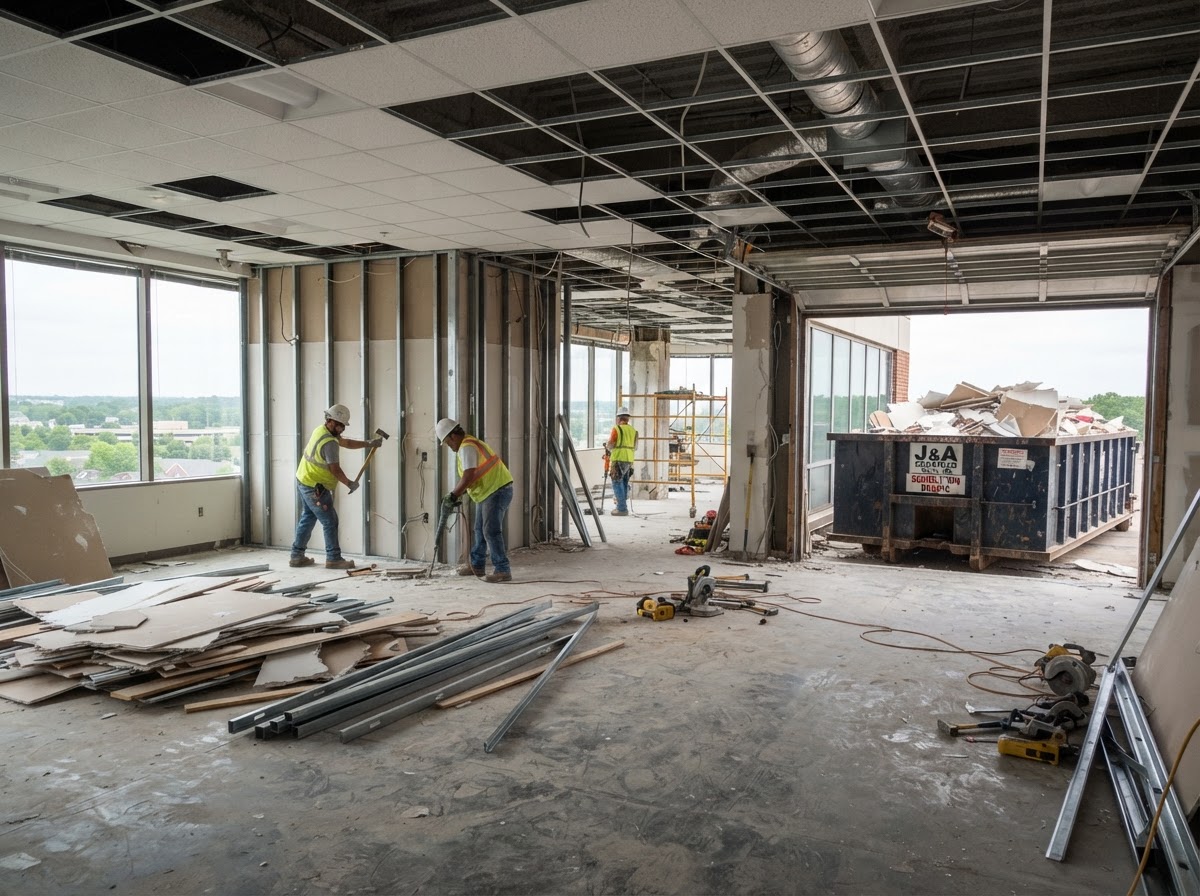
Nonstructural Interior Components for Scope Review
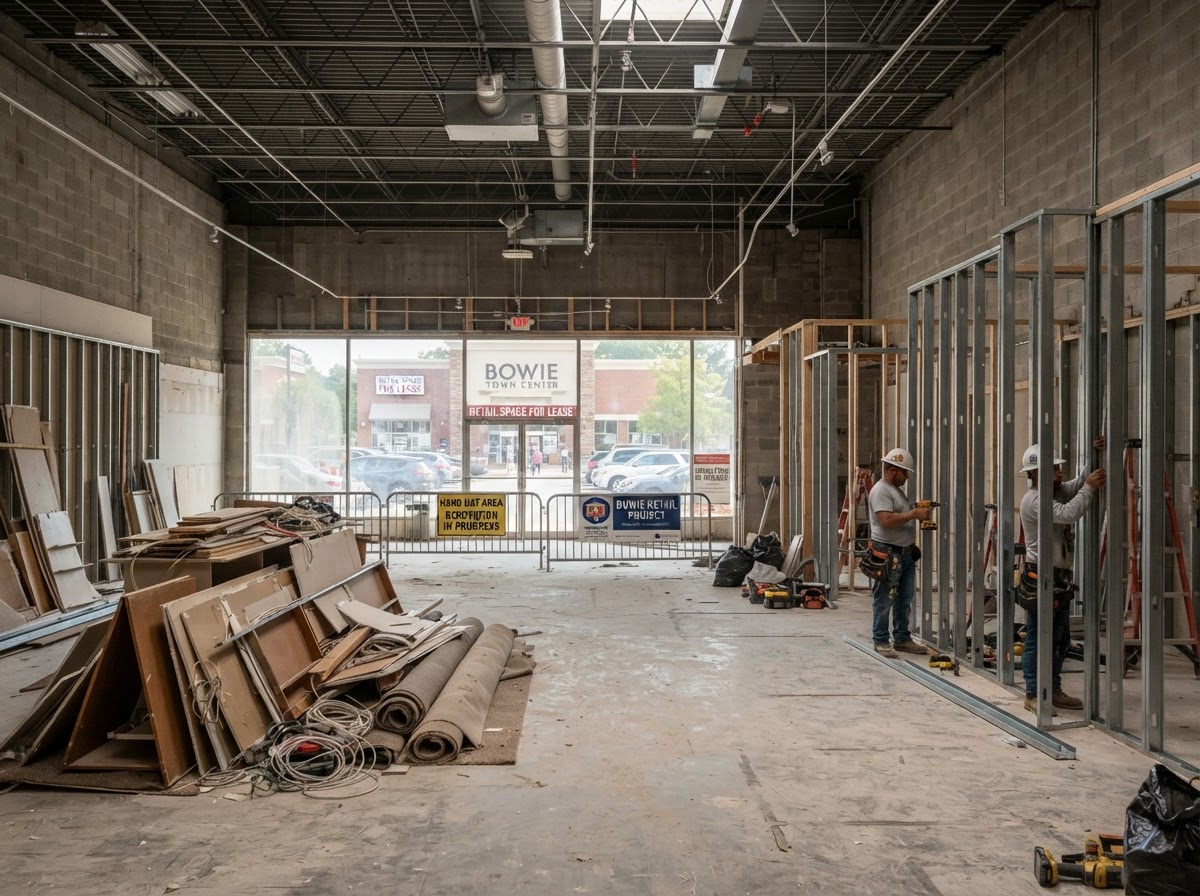
Office, Retail, and Commercial Space Renovation Projects
Commercial interior demolition inquiries in Bowie tend to follow a few situations. Here's what we see across commercial renovation projects.
Office renovation
Nonstructural partitions, old finishes and fixtures cleared from an office before a remodel, with debris hauled away.
Retail alteration
Old fixtures, cabinetry and flooring removed from a retail space during a reconfiguration.
Selective clearing
Approved nonstructural components removed to prepare a commercial space for the next build-out.
Debris hauling
Renovation debris from an interior tear-out hauled from the site after the approved work is complete.
Our Commercial Interior Demolition Scope Review Process
Describe the Space and Components
Tell us the space type, the components to remove, the access, any utility connections and who's authorizing the work.
Request Your Estimate
We review the components, the access, the authorization and any permit or utility considerations and provide an estimate based on the eligible scope.
Review Scope, Permits and Utilities
We confirm what's eligible, flag any structural, utility or regulated-material concerns, and confirm any required approvals.
Schedule and Complete Approved Work
On the scheduled visit, we complete the approved tear-out and haul the debris to the appropriate disposal stream.
Demolition Authorization, Permit, and Utility Considerations
A commercial interior demolition inquiry depends on the space and the components. These details help scope the eligible work.
Factors Affecting Commercial Interior Demolition Estimates
Scope of tear-out
The components to remove — partitions, cabinets, fixtures, flooring — drive the labor and the debris volume.
Access and staging
Floor level, elevator access, parking and debris-staging area all change the labor and the time.
Utility and permit review
Electrical, gas, plumbing, fire-suppression and permit considerations may require separate qualified parties.
Debris hauling
The volume and material type of renovation debris drives the hauling and disposal routing.
Commercial Interior Demolition vs. Debris Hauling
There's a clear distinction between the scope levels: loose junk removal covers furnishings and eligible debris; selective nonstructural tear-outs cover approved building components subject to capability and authorization; full commercial renovation preparation may involve multiple trades; and construction debris hauling covers the removal of already-generated renovation waste. We confirm which level applies as part of the scope review.
Renovation debris from an approved tear-out is typically sorted and directed to the appropriate disposal or recycling stream in Prince George's County. We don't claim structural demolition capability, load-bearing wall removal, electrical or gas disconnection, plumbing modifications, fire-suppression alterations, asbestos abatement, lead remediation, hazardous-material handling, permit procurement or commercial demolition licensing without individual verification.
Structural, Utility & Regulated Material Review
Commercial interior demolition is a scope-review inquiry — we don't claim structural demolition capability, load-bearing wall removal, electrical disconnection, gas disconnection, plumbing modifications, fire-suppression system alterations, asbestos abatement, lead remediation, hazardous-material handling, permit procurement or commercial demolition licensing without individual verification. Structural, utility and regulated-material concerns require separate qualified parties. Describe the space, the components and the scope and we'll confirm the eligible pathway.
Related Demolition & Construction Services
Commercial Interior Demolition Questions in Bowie
What's the difference between junk removal and interior demolition?
Loose junk removal covers furnishings and eligible debris. Selective interior tear-outs cover approved nonstructural building components subject to capability and authorization. Structural demolition is specialized work outside ordinary junk hauling.
Can you remove nonstructural partitions?
Selective nonstructural partition removal may be eligible subject to capability and authorization. Tell us the space and the components and we'll review the scope.
Can you remove load-bearing walls?
No. Load-bearing wall removal is structural work requiring separate qualified contractors, plans, permits and engineering review.
Do you disconnect electrical, gas or plumbing?
No. Electrical, gas, plumbing and fire-suppression disconnection require qualified parties. Utilities must be safely disconnected before any tear-out can proceed.
Do you handle asbestos or lead?
No. Asbestos abatement and lead remediation require separate qualified handling. Suspected regulated materials must be assessed and addressed before any demolition work.
Do you obtain permits?
We don't claim permit procurement or commercial demolition licensing without verification. Applicable permits and approvals are confirmed as part of the scope review.
Can you haul the renovation debris after a tear-out?
Often, yes. Renovation debris from an approved tear-out is hauled to the appropriate disposal or recycling stream. Tell us the volume and we'll scope the hauling.
Ready to Discuss That Commercial Tear-Out?
Tell us the space, the components, the access and the scope — and confirm who's authorizing the work. Request a commercial interior demolition estimate, or call us to confirm the eligible scope before any work begins.