Where Your Junk Goes — Donation & Recycling: Disposal Pathway Resource
After a junk removal estimate, the items that leave a home don't all go to one place. Usable furniture and household goods may be candidates for donation, certain materials may be recycled, and what's left is disposed of — but none of those outcomes is guaranteed. This resource explains how to think about where your junk goes, what affects whether an item can be donated or recycled, and why a specific diversion rate can't honestly be promised.
Request a Junk Removal Estimate
Tell us what you need hauled in Bowie, MD & nearby areas.
Donation & Recycling Pathways in and near Maryland
Where items go after a removal depends on the item's condition, the material, the receiving organization's current acceptance policies, and the facilities available for the specific material in the area. Usable furniture and working appliances may be candidates for donation; scrap metal and certain electronics may be candidates for recycling; damaged, soiled, or nonfunctional items are generally disposed of. None of those outcomes is automatic.
This means a single 'zero-landfill' or specific diversion-rate claim is not something an honest hauling business can promise in advance. Whether a couch is accepted by a charity depends on its condition and that organization's current policies; whether electronics are recycled depends on the material and an available responsible recycler. The realistic approach is to sort usable items, separate recyclable materials, and dispose of the rest — without promising a fixed outcome.
This resource is educational. It explains how donation and recycling pathways work in practice and points customers toward confirming an item's condition and a receiving organization's current acceptance rules — without claiming a charity partnership, a diversion percentage, or guaranteed recycling that hasn't been verified.
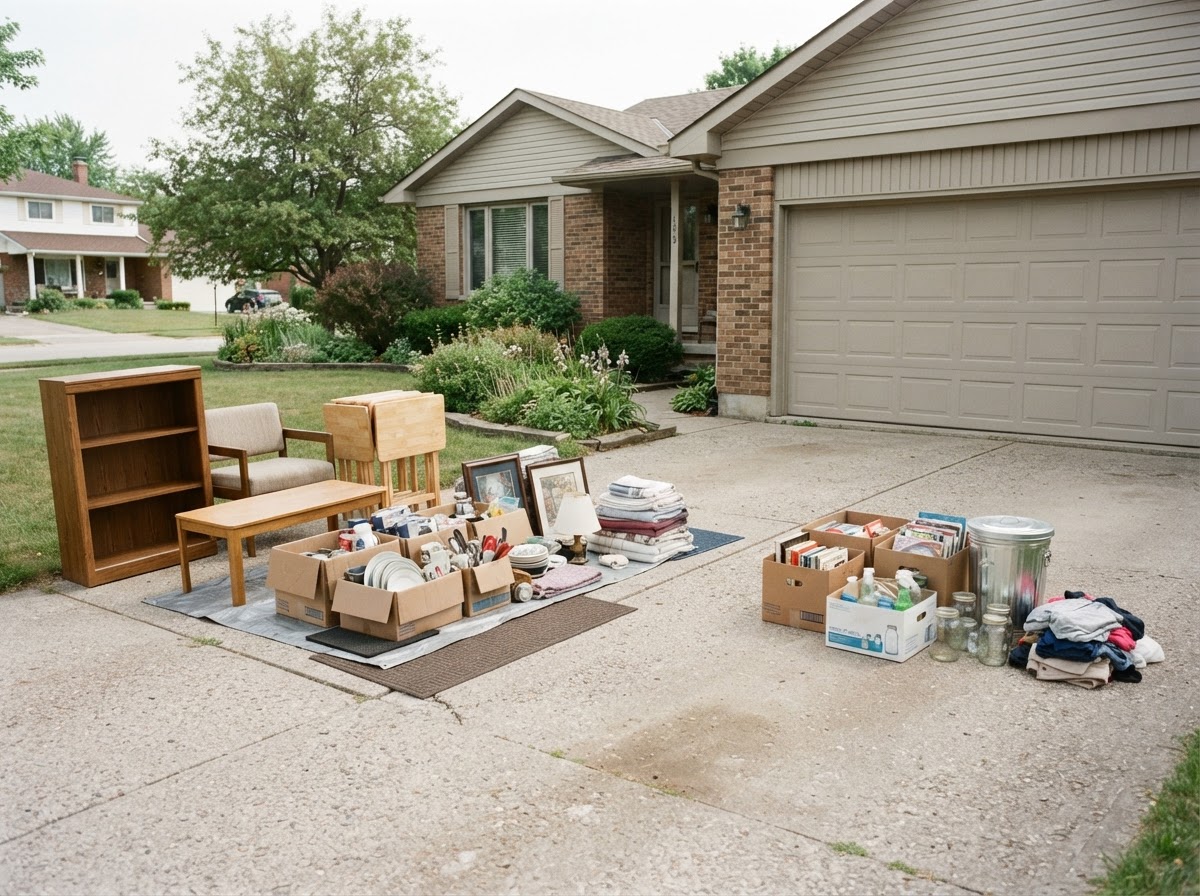
Items That May Be Donated or Recycled
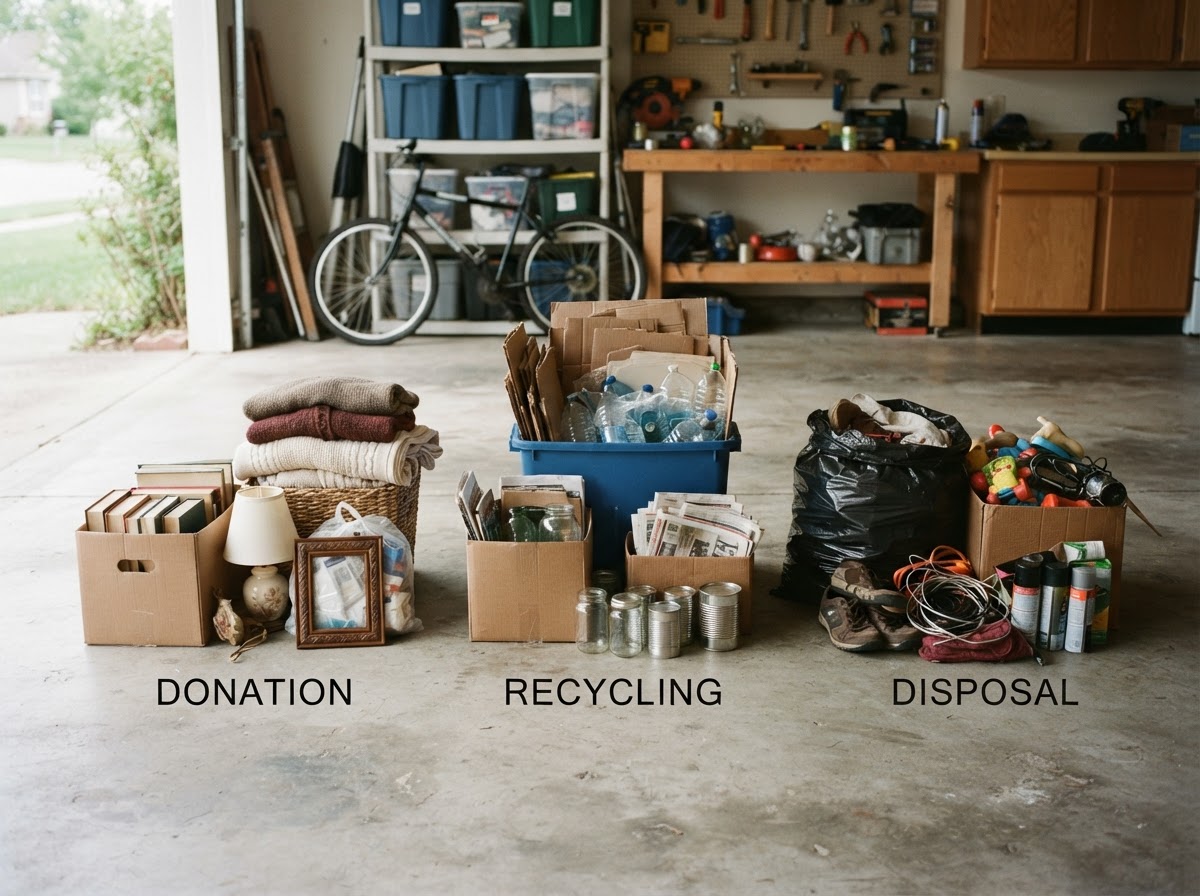
Donation vs. Recycling vs. Disposal
Different items follow different pathways. Here's how to tell them apart.
Donation candidates
Clean, functional furniture, appliances, and household goods may be accepted by a charity or reuse organization — depending on condition and current policies.
Recycling candidates
Scrap metal, certain electronics, and eligible e-waste may be routed to a responsible recycler where one is available for that material.
Disposal
Damaged, soiled, broken, or nonfunctional items — and anything no charity or recycler will accept — are disposed of through the available waste route.
Specialized handling
Refrigerants, paint, batteries, and other restricted materials require specialized handling rather than ordinary donation, recycling, or disposal.
How to Think About Where Your Items Go
Sort by Condition
Separate usable items from broken or soiled ones. Only clean, functional items are realistic donation candidates.
Identify Recyclable Materials
Flag scrap metal and eligible electronics that may be routed to a responsible recycler where one is available for the material.
Check Donation Acceptance
Whether an item is accepted depends on its condition and the receiving organization's current policies. Donation is never guaranteed.
Separate Restricted Materials
Pull out refrigerants, paint, batteries, or possible hazardous materials that require specialized handling rather than ordinary disposal.
Describe the Mix for the Estimate
Describe the usable, recyclable, and disposal piles so the hauling scope and any specialized handling can be reviewed accurately.
Donation & Recycling Planning Checklist
Consider these details before requesting a hauling estimate.
What Affects Where Your Items Go
Condition
An item's condition is the single biggest factor in whether it can be donated, recycled, or must be disposed of.
Receiving organization policies
Charities and recyclers set their own current acceptance rules. Donation or recycling is never guaranteed for any specific item.
Material type
Scrap metal, e-waste, and ordinary household goods follow different pathways, and restricted materials require specialized handling.
Local facility availability
Whether a responsible recycler or charity is available for the material in the area affects what can actually be diverted.
Why a Fixed Diversion Rate Can't Be Promised
An honest hauling business can't promise a specific recycling percentage or a zero-landfill outcome, because where items actually go depends on condition, the receiving organization's current policies, and facility availability — none of which is guaranteed in advance. The honest approach is to sort usable items for donation where accepted, route eligible materials to a responsible recycler where one is available, and dispose of the remainder through the available waste route.
Where a specific charity partnership or certified recycling arrangement is claimed, that relationship would need to be verified — this resource does not assert either. Confirm an item's condition and a receiving organization's current acceptance policies before relying on a donation or recycling outcome.
No Guaranteed Donation, Recycling, or Diversion Rate
Junk Monsters does not claim a specific recycling percentage, a zero-landfill outcome, a guaranteed donation, or a certified charity partnership. Where items actually go depends on condition, the receiving organization's current acceptance policies, and the facilities available for the material. Confirm any donation or recycling arrangement directly with the receiving organization before relying on it.
Related Disposal & Recycling Resources
Donation & Recycling Questions
Do you guarantee my items will be donated or recycled?
No. Whether an item is donated or recycled depends on its condition and the receiving organization's current acceptance policies. Usable items may be candidates for donation and certain materials for recycling, but neither outcome is guaranteed. Damaged, soiled, or nonfunctional items are generally disposed of.
What items are most likely to be donated?
Clean, functional furniture, working appliances, undamaged clothing and linens, and usable household goods are the most realistic donation candidates — but acceptance still depends on the receiving organization's current policies. Confirm donation acceptance directly with the charity if it matters to you.
Can electronics be recycled?
Certain electronics and e-waste may be routed to a responsible recycler where one is available for the material. Older or nonfunctional devices, batteries, and components may require specialized handling. Describe the electronics involved so the right pathway can be reviewed.
What's your recycling or diversion rate?
We don't claim a specific diversion percentage. Where items go depends on condition, the receiving organization's current policies, and local facility availability, none of which is guaranteed. The honest approach is to sort, donate where accepted, recycle where available, and dispose of the rest.
Do you have a charity partnership?
This resource does not assert a specific charity partnership. Where a donation arrangement matters to you, confirm the receiving organization's current acceptance policies directly. Any claimed partnership would need to be verified separately.
What happens to items that can't be donated or recycled?
Items that no charity or recycler will accept — damaged, soiled, or nonfunctional pieces — are disposed of through the available waste route. Restricted materials like refrigerants, paint, or batteries require specialized handling rather than ordinary disposal.
Wondering Where Your Removed Items Will Go?
Sort usable items, flag recyclable materials, and separate anything that may need specialized handling. Then describe the mix of donation, recycling, and disposal items — and request a hauling estimate, or call us to talk through what can realistically be diverted.