
Brush, Branch & Storm Debris Removal in Bowie, MD
Brush, branch, and storm debris removal is the heavier end of outdoor cleanup — fallen branches, large brush piles, and the debris a storm leaves behind. These loads are bigger and more awkward than general yard waste, so tell us the size, the site conditions, and what's safe to haul.
Request a Junk Removal Estimate
Tell us what you need hauled in Bowie, MD & nearby areas.
Brush and Storm Debris Removal in and Near Bowie
Storm and heavy-brush removal covers fallen branches, accumulated brush, large branch piles, tree-trimming debris, and wind-blown outdoor clutter left after a storm. It's distinct from general yard waste because the pieces are bigger, heavier, and sometimes unsafe to handle casually.
What matters here is the site. A pile of loose branches in an open yard is one job; heavy limbs, a whole fallen tree, or debris near utilities is a different scope entirely. The estimate starts with what's there and whether the site is safe to work in.
We don't perform tree removal, emergency storm response, utility-line work, or hazardous-debris handling without confirmation. If debris involves downed power lines or a whole tree, that may require a specialist rather than a standard haul.
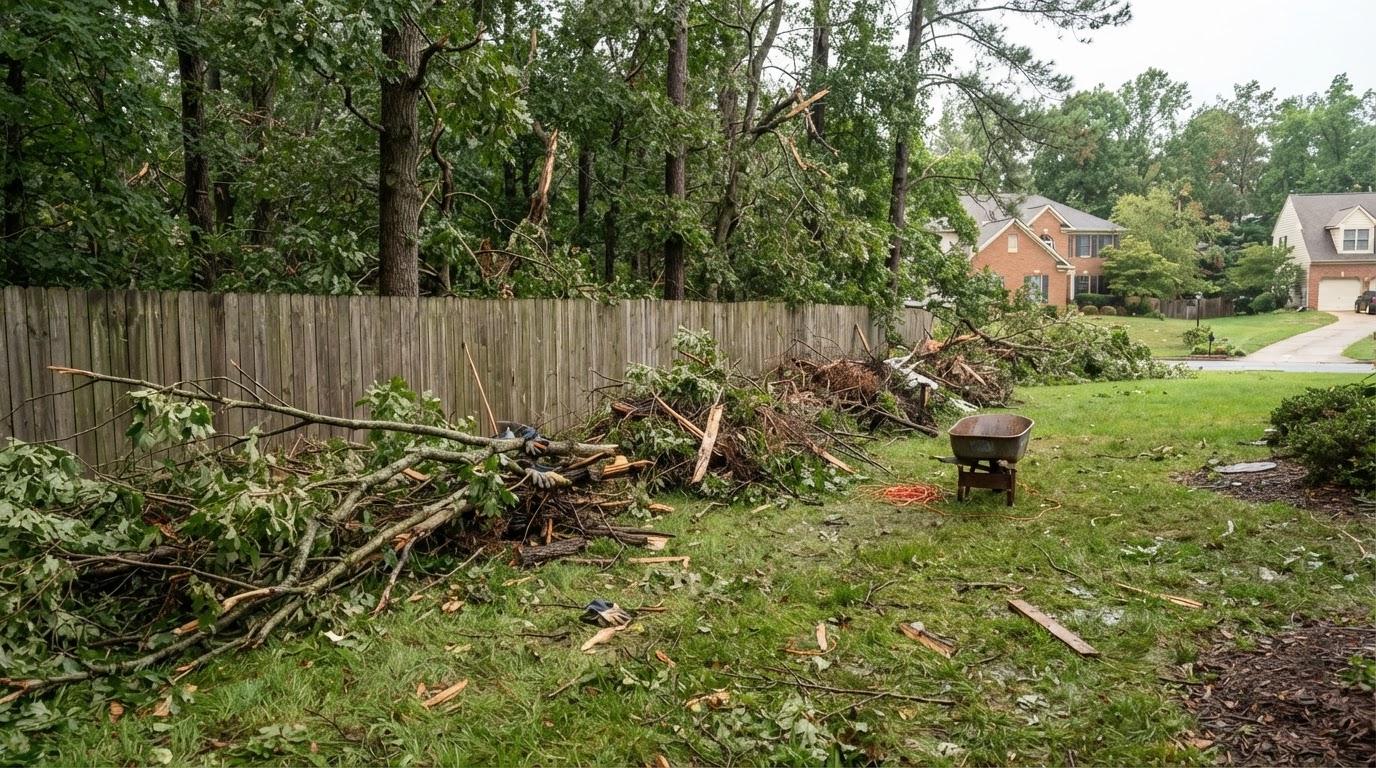
Large Branch and Brush Pile Removal
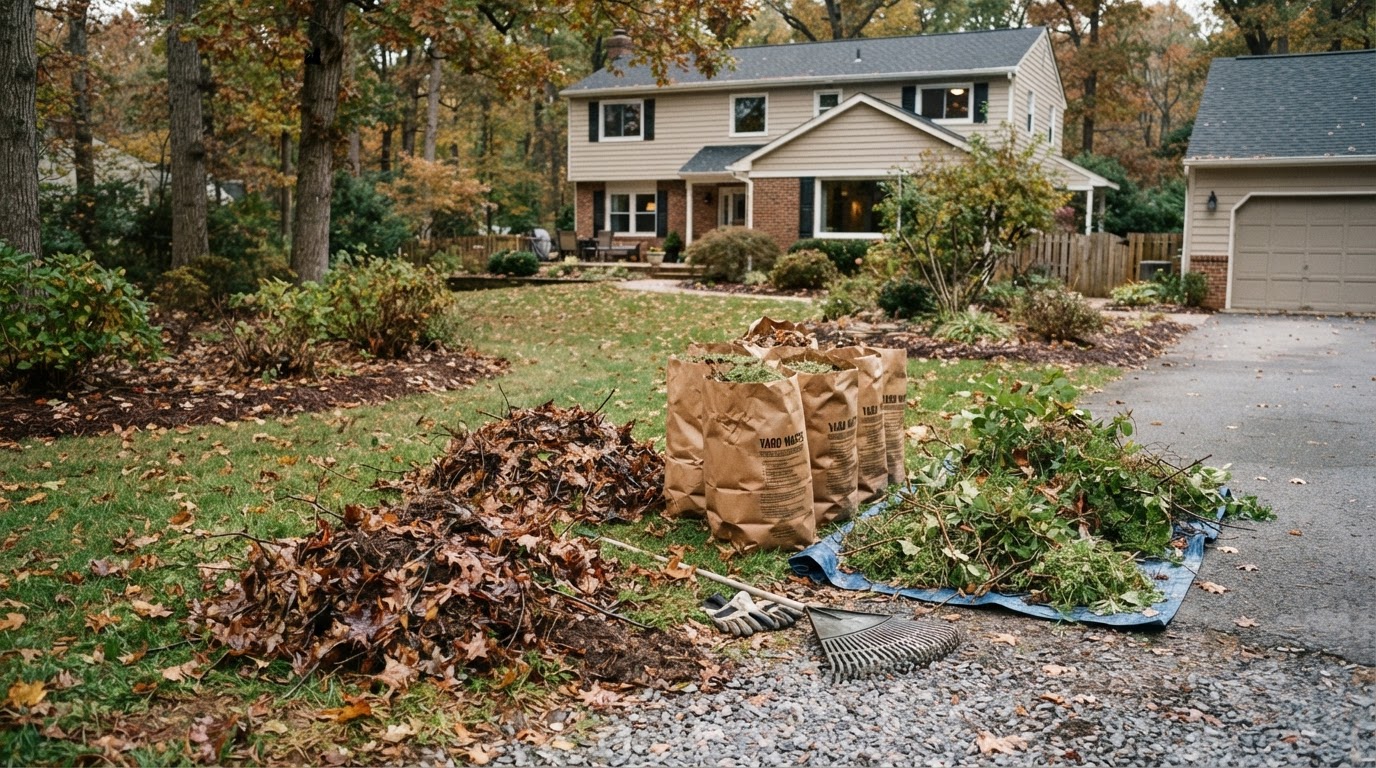
Storm-Related Yard Cleanup for Bowie Properties
Heavy-debris pickups tend to come after specific events. Here's what we see across Bowie.
After a storm
Downed branches and wind-blown debris cleared once the weather passes and the site is safe to work in.
Tree-trimming aftermath
Large limbs and brush hauled away after a trimming job leaves a pile too big for the green-waste bin.
Accumulated brush
A back corner that's built up brush over time and finally needs a full clear.
Large-volume clearing
A big brush pile from a lot cleanup that's more than a household can handle alone.
How Brush and Storm Debris Removal Works
Describe the Debris and Site
Tell us the branch and brush sizes, the volume, and the site conditions — and flag any downed lines or dangerous limbs.
Request Your Estimate
We review volume, weight, and safe site access and provide an estimate based on the real scope.
Review Scope and Safety
We confirm what can be safely hauled, whether the site is clear of hazards, and a time that works.
Complete the Haul
On the scheduled visit, we load the approved debris and route it to the appropriate vegetation-disposal stream.
Preparing Outdoor Debris for Hauling
Safety comes first with storm debris. A few checks up front keep the haul safe and efficient.
Access and Volume Considerations After Storms
Debris size and weight
Small branches versus heavy limbs or a whole fallen tree changes crew, equipment, and disposal.
Volume
A small pile versus a yard-full of brush changes truck space and loading time.
Site safety
Debris near utilities, structures, or downed lines may require a specialist rather than a haul.
Access to the pile
Open yard versus a tight side gate or sloped access changes how the crew loads.
Disposal and Handling Considerations
Heavy brush and storm debris is typically directed to an appropriate vegetation-disposal route. What can be accepted depends on the material size and current facility rules in Prince George's County.
We don't perform tree removal, emergency storm response, utility-line work, or hazardous-debris handling without confirmation. If the debris involves downed power lines, a whole fallen tree, or a dangerous suspended limb, that may require a specialist — describe the situation and we'll confirm the right path.
Safety First: Utilities & Dangerous Limbs
Debris near downed power lines, utility equipment, or dangerous suspended limbs may require a specialist rather than a standard haul. Confirm the site is safe before requesting pickup, and flag any hazards so we can review the right approach — we don't work near downed power lines.
Related Outdoor Removal Services
Brush and Storm Debris Removal FAQs
Can I request removal of large branch piles?
Yes — large brush and branch piles are common. Tell us the size and volume and we scope the crew and truck. For a whole fallen tree, that may require a tree-removal specialist rather than a haul.
What storm debris may require a specialist?
Debris near downed power lines or utility equipment, a whole fallen tree, or dangerous suspended limbs may need a specialist. Describe the situation and we'll confirm the right path — we don't work near downed power lines.
Do you handle emergency storm response?
Not as an emergency service. We schedule storm-debris hauling once the weather passes and the site is safe to work in. For urgent hazards, contact the appropriate emergency or utility responder.
Can you take debris from a tight back yard?
Often, yes — note any gate, fence, or slope that affects access and we plan the carry and loading around it.
What if the pile mixes brush with structural storm damage?
Mixed structural and vegetation debris may need different handling. Describe what's in the pile and we confirm what can be hauled versus what needs a different route.
How is the storm debris disposed of?
Heavy brush and storm debris is typically routed to a vegetation-disposal stream. We confirm the route based on material size and current facility rules — we don't guarantee a specific outcome for any load.
Ready to Clear the Storm Debris?
Tell us the branch sizes, the volume, and the site conditions — and flag any hazards. Request a brush and storm debris removal estimate, or call us to confirm a safe plan.