
School, University & Church Property Cleanouts in Bowie, MD
School, university and church cleanouts cover the classroom desks, chairs, tables, bookshelves, filing cabinets, administrative furniture, storage contents and fellowship-hall furnishings that accumulate during a renovation, a relocation or a facility transition. Tell us the facility, the space type, the contents and the access and we'll review the scope before any work begins.
Request a Junk Removal Estimate
Tell us what you need hauled in Bowie, MD & nearby areas.
School, University & Church Cleanouts in and near Bowie, MD
School, university and church cleanouts cover classroom desks, chairs, tables, bookshelves, filing cabinets, administrative office furniture, storage room contents, fellowship hall furnishings, meeting room furniture, nonregulated fixtures, approved maintenance storage items and nonhazardous surplus furnishings across Bowie and nearby educational, religious and community institutions.
What makes an institutional cleanout different from a residential haul is the volume, the access and the scheduling around occupied or shared spaces. Facility access, authorization, timing and coordination with administrators or property representatives all shape the scope — and we don't imply partnerships, completed projects, facility access or authorization from any institution.
We don't handle student or employee records, restricted educational records, electronic data destruction, laboratory chemicals, science-classroom hazardous materials, school medical supplies, secure-facility access or work around occupied child-care or student areas without proper authorization. Describe the facility, the space and the contents and we'll scope the eligible removal.
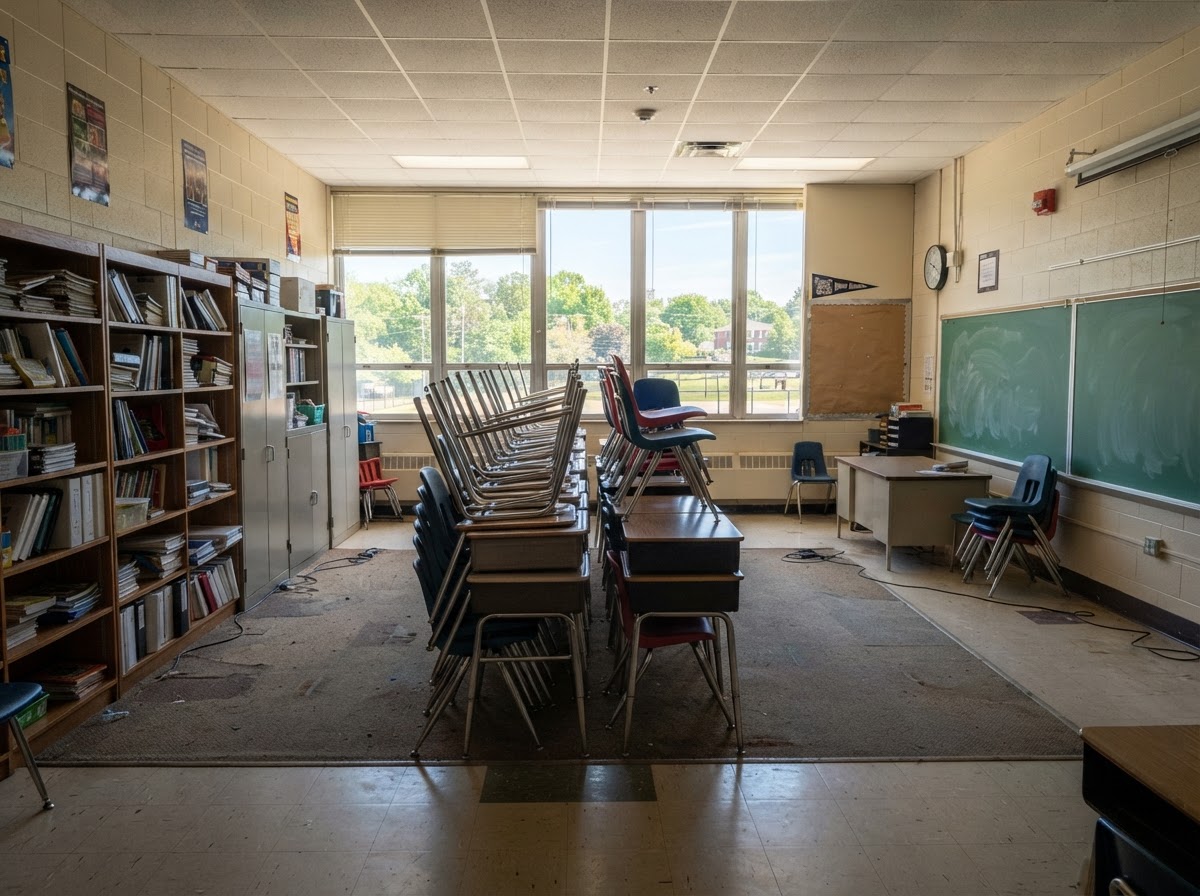
Furniture and Materials Commonly Found in Institutional Cleanouts
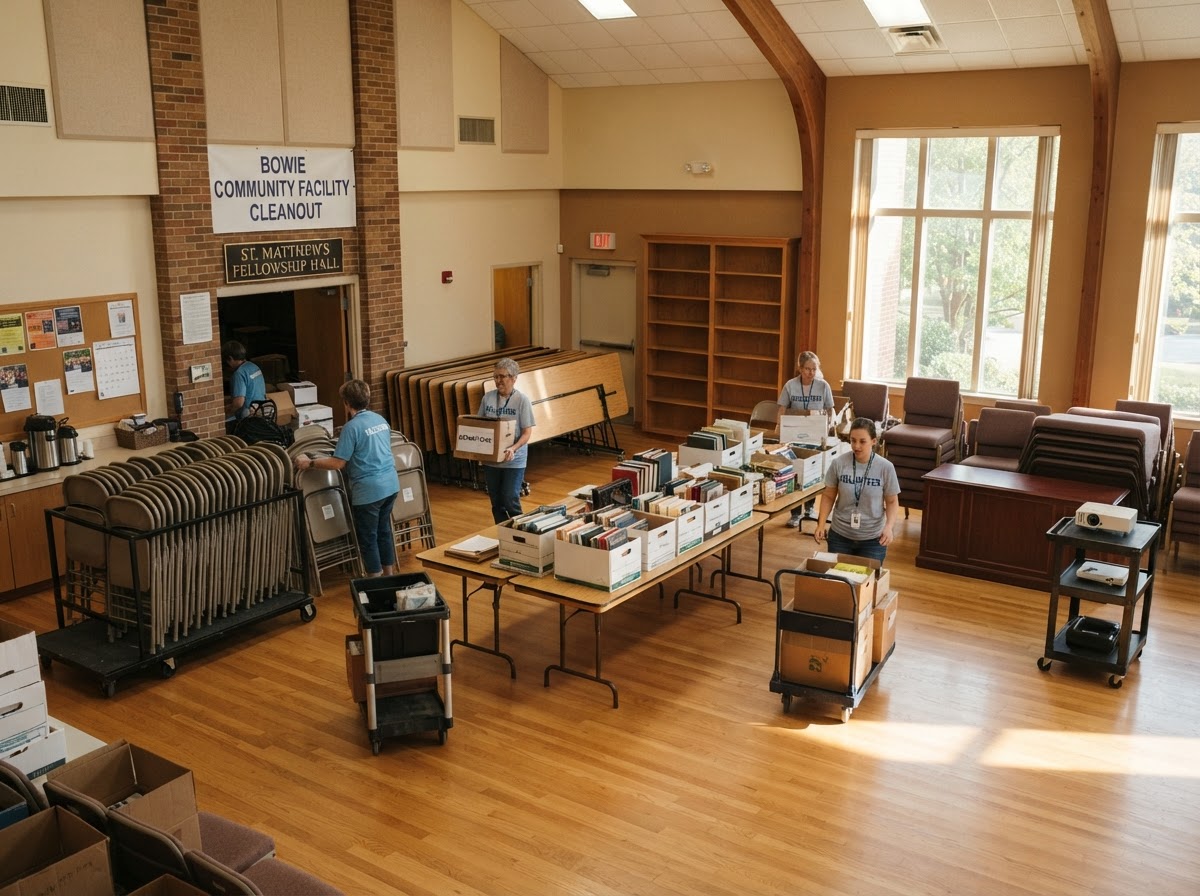
School Furniture and Classroom Cleanout Inquiries
Institutional cleanouts in Bowie tend to follow a few situations. Here's what we see across educational, religious and community facilities.
Classroom refresh
Old desks, chairs and bookshelves cleared from a classroom before a renovation or furniture replacement.
Campus storage
Accumulated surplus furnishings and storage-room contents hauled from a university or school storage area.
Fellowship hall
Folding chairs, tables and meeting-room furniture cleared from a church or community facility.
Administrative office
Office furniture and filing cabinets removed from an administrative area during a transition.
Our Educational and Religious Facility Cleanout Process
Describe the Facility and Space
Tell us the institution, the space type, the contents, the access and who's authorizing the removal.
Request Your Estimate
We review the contents, the volume, the access and the authorization and provide an estimate based on the real scope.
Review Access and Scheduling
We confirm what's included, the scheduling around facility use, and any coordination with administrators needed.
Complete the Approved Cleanout
On the scheduled visit, we remove the approved furnishings and direct them to the appropriate disposal or recycling stream.
Facility Cleanout Planning by Space Type
An institutional cleanout depends on the facility and the space. These details help scope the work and schedule around facility use.
Institutional Junk Removal Estimate Factors
Furniture volume
The number of desks, chairs, tables and bookshelves drives the labor and the haul size.
Space type
Classrooms, offices, libraries, halls and storage rooms each shape access and loading.
Access and scheduling
Facility access, scheduling around occupied areas and loading distance all change the labor and the time.
Authorization
Who's authorizing the removal — administrator or property representative — must be confirmed first.
Facility Access, Scheduling, and Authorization
Institutional furnishings — desks, chairs, tables, bookshelves and surplus furniture — are typically sorted and directed to the appropriate disposal or recycling stream in Prince George's County. We confirm the route as part of the scope review based on the contents and current facility rules.
We don't handle student or employee records, restricted educational records, electronic data destruction, laboratory chemicals, science-classroom hazardous materials, school medical supplies, secure-facility access or work around occupied child-care or student areas without proper authorization. Where specialized handling is required, we flag it and confirm the right pathway.
Institutional Access & Restricted Material Review
School, university and church cleanouts require facility authorization and scheduling around occupied areas — we don't imply partnerships, completed projects, facility access or authorization from any institution, and we don't handle student or employee records, restricted educational records, electronic data destruction, laboratory chemicals, science-classroom hazardous materials, school medical supplies, secure-facility access or work around occupied child-care or student areas without proper authorization. Describe the facility, the space and the contents and we'll confirm the eligible scope.
Related Commercial Cleanout Services
School, University & Church Cleanout Questions in Bowie
Can you remove classroom desks and chairs?
Often, yes. Classroom desks, chairs, tables, bookshelves and storage cabinets are common institutional hauls. Tell us the volume and we'll scope the removal.
Do you work around occupied student or child-care areas?
Only with proper authorization and scheduling. Tell us the facility use and we'll coordinate the timing to minimize disruption.
Can you remove science-classroom chemicals or lab materials?
No. Laboratory chemicals and science-classroom hazardous materials are outside this service and require separate qualified handling.
Do you destroy student or employee records?
No. Restricted educational records and electronic data destruction are outside this service. Handle confidential records through an appropriate secure-destruction pathway before any cleanout.
Can you clear a fellowship hall or meeting room?
Often, yes. Folding chairs, tables and meeting-room furniture are common hauls. Tell us the space and the contents and we'll scope the removal.
Does facility access affect the estimate?
Yes. Facility access, scheduling around occupied areas and loading distance all change the labor and the time. Tell us the access when you request the estimate.
Who needs to authorize an institutional cleanout?
The facility administrator or authorized property representative — whoever has authority to direct the removal. We confirm authorization before any cleanout.
Ready to Clear That Facility?
Tell us the institution, the space type, the contents and the access — and confirm who's authorizing the removal. Request a school, university or church cleanout estimate, or call us to confirm the right scope before any work begins.